
The Structure Behind Canadian Administrative Law

Canadian administrative law often does not feel difficult at the beginning. It feels scattered.
Students move through doctrines — procedural fairness, bias, legitimate expectations, standards of review — and each concept appears manageable when studied on its own. The rules can be understood. The cases can be followed. At that stage, there is usually a sense that the subject is under control.
That impression does not last.
The difficulty begins when those same doctrines are no longer encountered in isolation. A principle that seemed clear in one context begins to behave differently when it appears alongside another. A limitation introduced in one case resurfaces elsewhere, but not in the same form. What initially appeared stable begins to shift.
This is particularly visible in procedural fairness.
At a surface level, the idea is straightforward: decision-makers must act fairly. That is rarely where students struggle. The difficulty begins when that idea is carried into different decision-making settings. What appears restrictive in one situation may not operate the same way in another. The rule does not disappear — but it does not remain fixed either.
This is the point at which many students start to lose confidence in the subject.
It begins to feel as though the law is moving in several directions at once.
But the problem is not that the law lacks coherence.
It is that the student is encountering its parts without seeing how far they extend — or how they begin to interact.
A rule is encountered in one place. A qualification appears somewhere else. A further limitation surfaces in another case. None of these pieces are incorrect. But without seeing how they relate, the subject begins to feel unstable.
That is when administrative law starts to feel confusing in a deeper sense.
Not because the doctrines are complex in themselves, but because the understanding that seemed sufficient at the beginning no longer holds when it is carried forward.
This is the point most preparation does not fully address. Recognising that something is not holding is often the first real shift.
What follows — and how far that understanding needs to go — is a different question altogether.
Move from reading to real practice
More on Administrative Law
Continue Exploring the Editorial
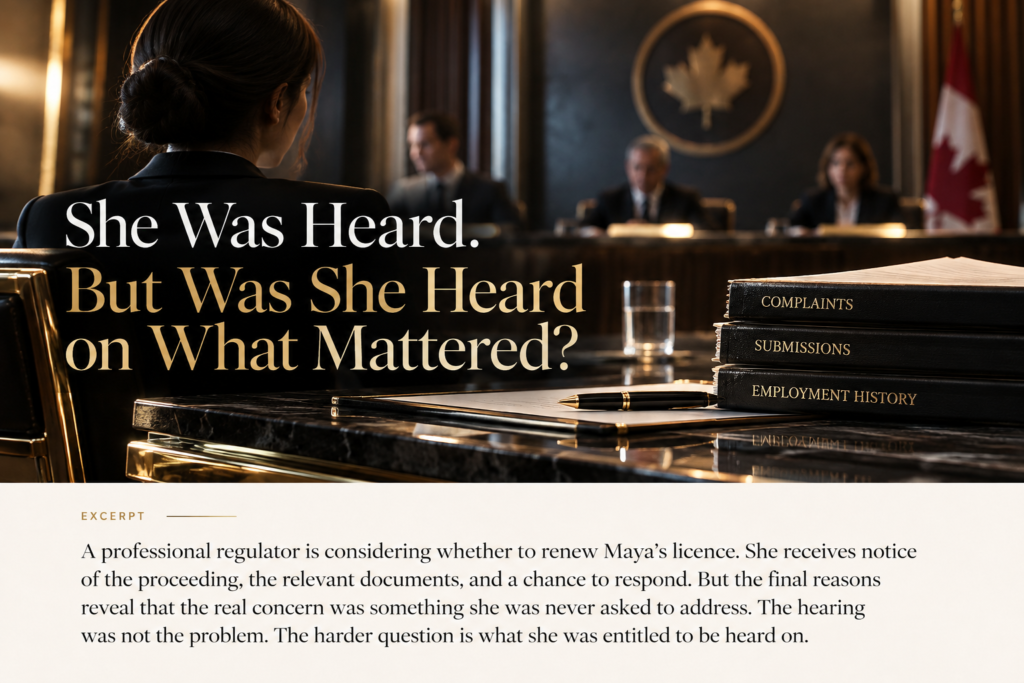
Procedural Fairness: Is a hearing always enough?
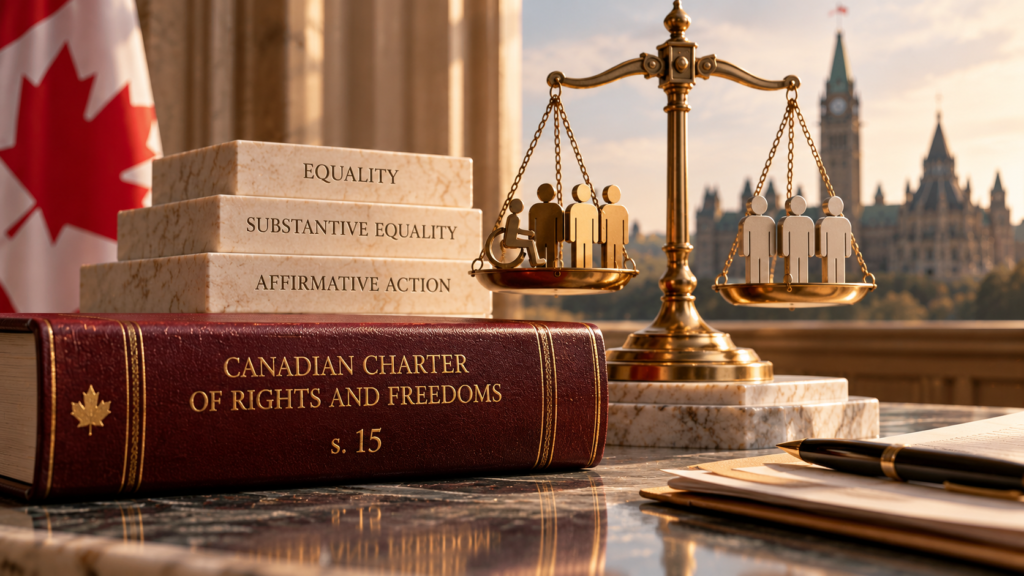
Affirmative Action and Section 15(2): Why Equality Does Not Always Mean Equal Treatment
The Charter Breach Is Obvious. What Exactly Should the Court Fix?

The Province Calls It Consumer Protection. Does That Matter?

Why Canada Is Rethinking the Bar Exam, and Why Candidates Should Care

The McKee Files | Episode 5: Who Decides What the Defence Gets to See? | AGP e-class™

The McKee Files | Episode 4: When Privacy Meets the Right to a Defence | AGP e-class™
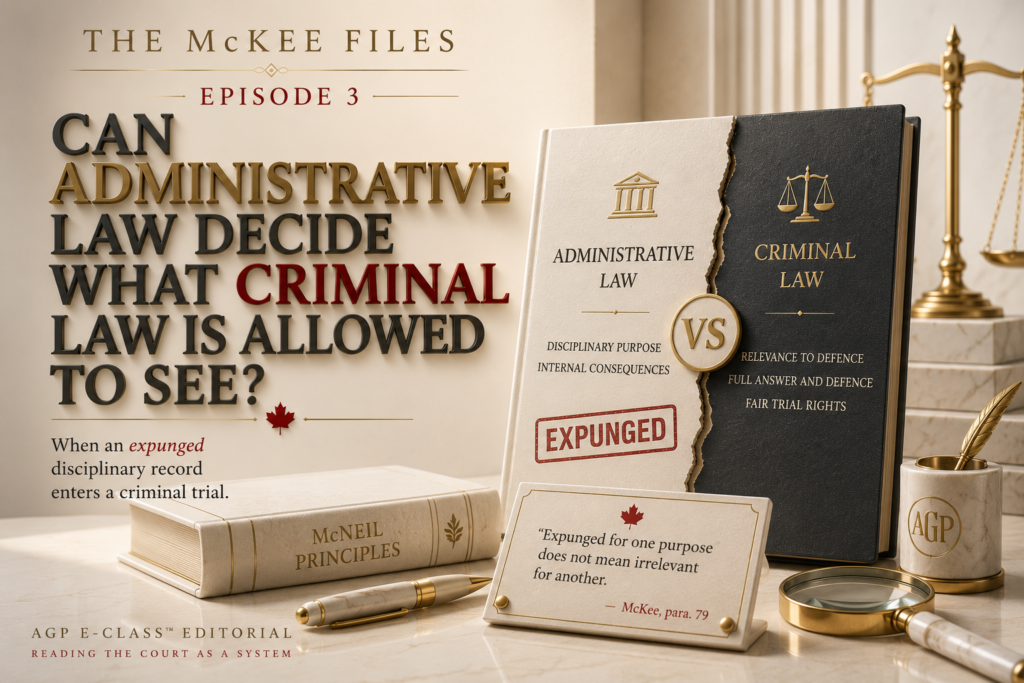
The McKee Files | Episode 3: Can Administrative Law Decide What Criminal Law Is Allowed to See?
The McKee Files | Episode 2: When Police Credibility Becomes a Fair-Trial Question
The McKee Files | Pilot: McKee Is Not Just a Criminal Law Case | AGP e-class™

Why Passive Reading Is Not Exam Preparation | AGP e-class™

Why Canadian Constitutional Law Exam Answers Fail Even When You Think You Know the Law

Why Canadian Constitutional Law Exam Feels Deceptive | AGP e-class™

Canadian Administrative Law Exam Is Not What You Think It Is | AGP – eclass™
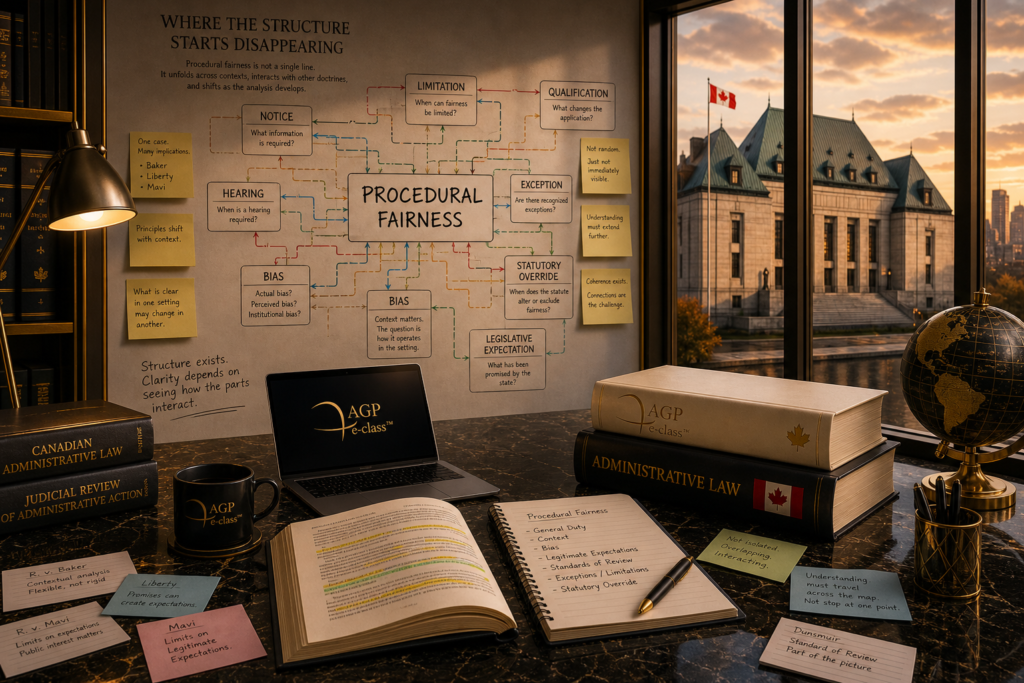
Why Procedural Fairness Often Feels Scattered | AGP e-class™

Why Canadian Administrative Law Feels Confusing | AGP e-class™
AGP e-class™ Student Insight Briefing
Follow the public conversation
Editorial pieces, professional opportunities, cohort updates, and Canadian law pathway signals.
Receive selected student updates
Important notices, new Editorial pieces, cohort information, and timely professional signals.
Watch deeper legal briefings
Long-form guidance on Canadian law, the NCA pathway, legal reasoning, and professional readiness.