
Why Canadian Constitutional Law Exam Answers Fail Even When You Think You Know the Law
There is a point in almost every Constitutional Law answer where the student feels:
“Oh, I know this.”
The issue has been identified.
The doctrine is familiar.
The structure feels clear.
And then a quiet instinct takes over:
“Let me put in everything that could possibly apply.”
What the student does not realize is that this may be the beginning of a disaster.
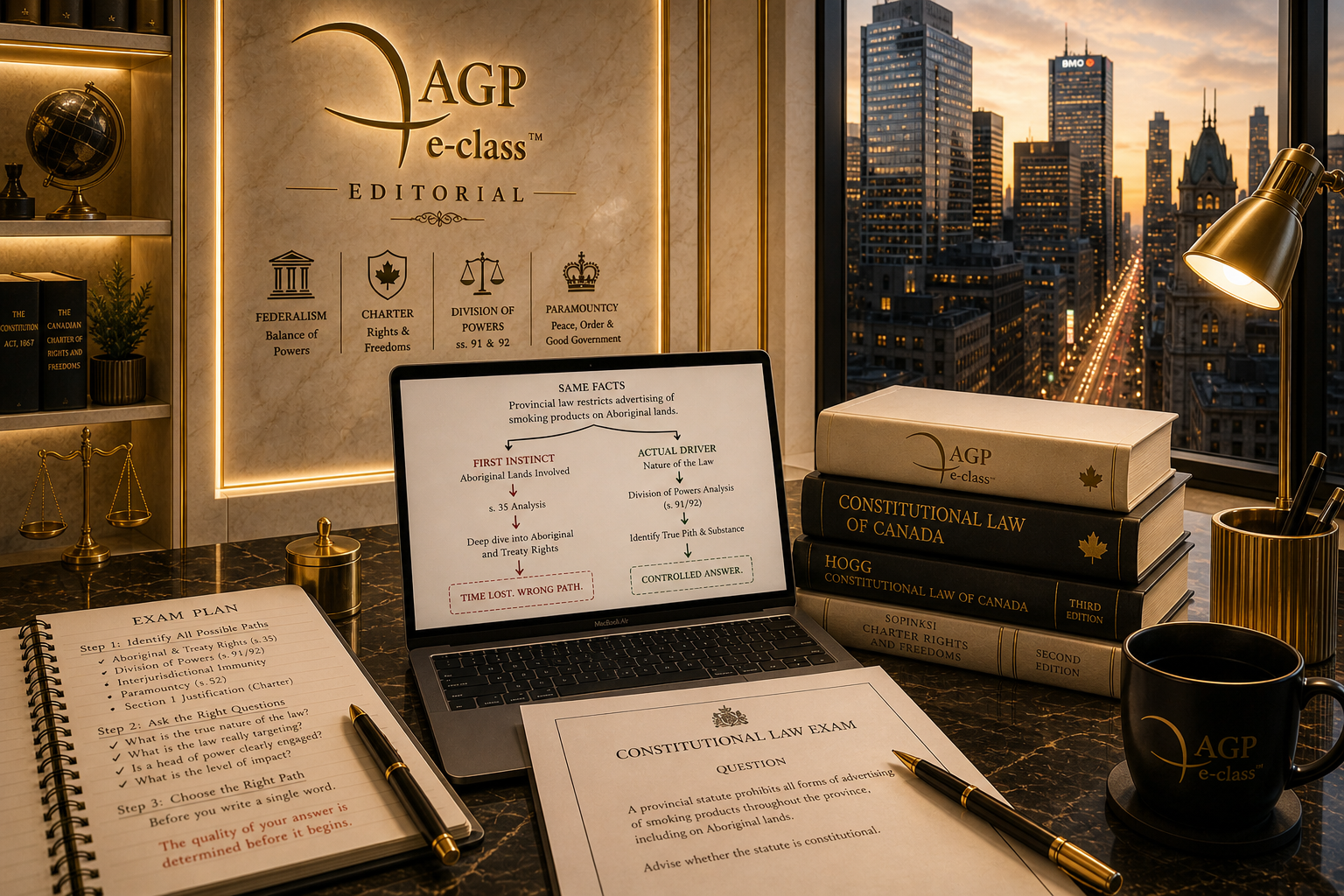
Hypothetically consider a question where a provincial law restricts advertising of smoking products throughout the province, including on Aboriginal lands.
At first reading, one fact stands out immediately.
Aboriginal lands are involved. And, that is enough to pull the answer in a particular direction.
A framework is selected — and, the writing begins.
The answer starts developing around that initial choice.
Everything appears to be in place.
The structure forms quickly in the student’s mind.
The reasoning feels justified.
There is no resistance whatsoever.
And for a while, everything seems to fit.
The answer feels like it is shaping well.
Until….
something feels off.
It turns out that the restriction in the question may not actually align with the direction that was chosen. It may be operating at a different level altogether.
That difference was not visible at the start.
It appeared gradually, often after the analysis had already taken shape.
And now, it is hard to ignore.
What stands out in the facts is not always what drives the analysis.
At that point, the answer is no longer being built carefully from the ground up.
It is being adjusted in the middle.
Some students step back, some continue forward anyway.
Either way, the cost is already there.
Time is spent reworking direction, or trying to force a second line of reasoning into an answer that had already committed itself elsewhere.
The answer becomes longer, but less certain — more detailed, but less controlled.
And the real danger is not limited to that one answer.
Because the time lost here does not stay here.
It is taken away from the rest of the paper.
A student who spends too long writing the wrong answer, or repairing it too late, may not just lose control of one question. The damage can spread quietly across everything that follows.
That is how an answer that seemed strong at the beginning can end up costing far more than expected.
In Constitutional Law, the difficulty is not merely in recognizing what could apply.
It is in holding back long enough to see what actually does.
Because once too much time is spent building in the wrong direction, it may no longer be only that answer at risk.
Sometimes, the rest of the paper is moving down with it.
The key takeaway
The real risk is not getting the law wrong. It is spending too long being confidently wrong, and realizing it only after it has already cost you the paper.
Move from reading to real practice
More on Constitution Law
Continue Exploring the Editorial
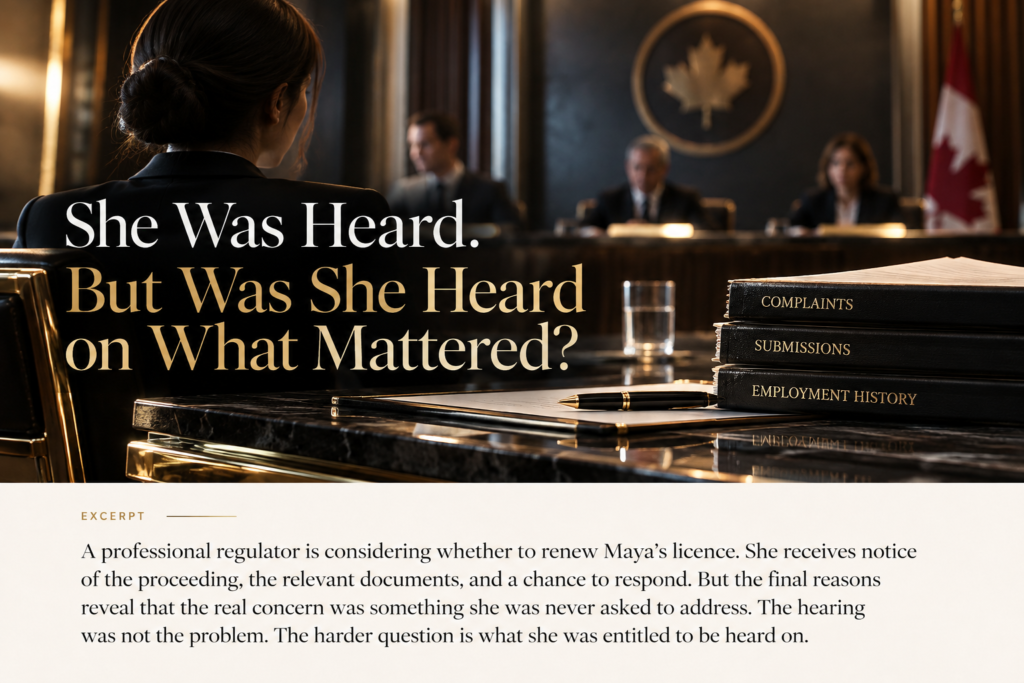
Procedural Fairness: Is a hearing always enough?
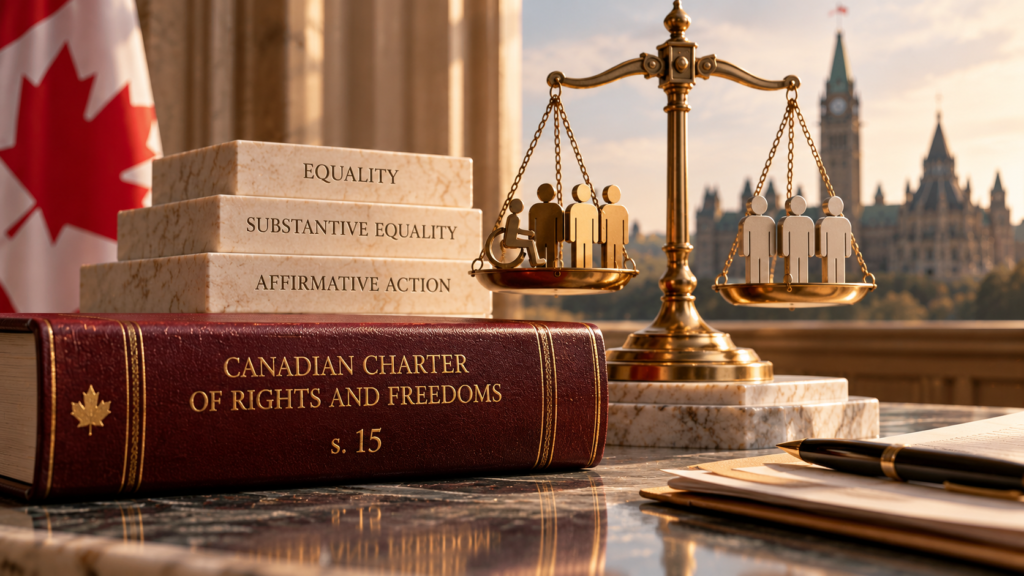
Affirmative Action and Section 15(2): Why Equality Does Not Always Mean Equal Treatment
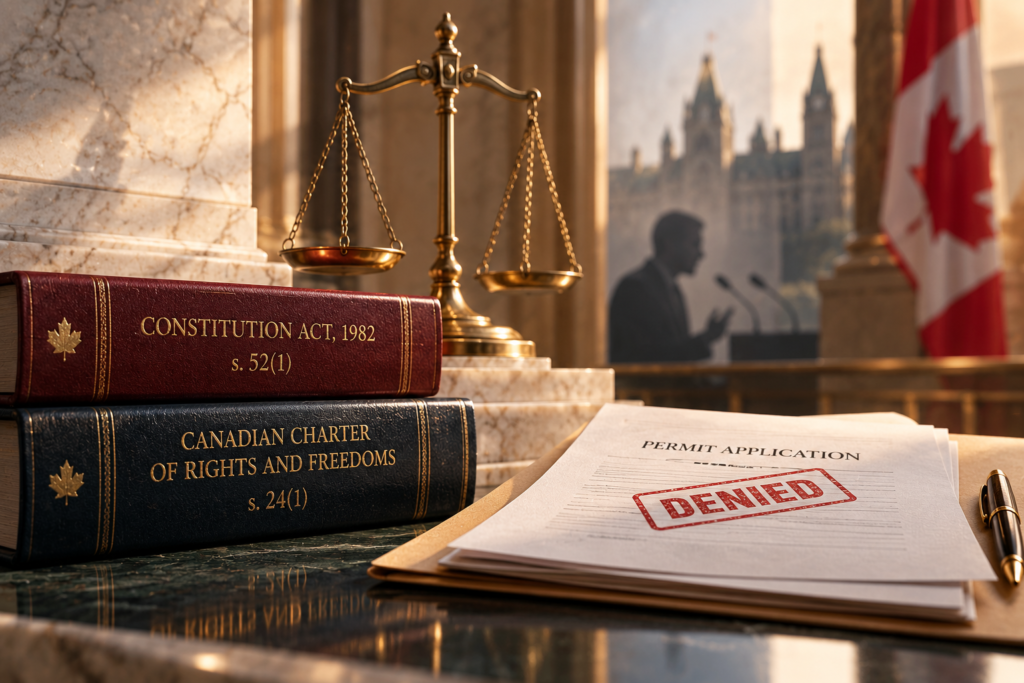
The Charter Breach Is Obvious. What Exactly Should the Court Fix?

The Province Calls It Consumer Protection. Does That Matter?
Why Canada Is Rethinking the Bar Exam, and Why Candidates Should Care

The McKee Files | Episode 5: Who Decides What the Defence Gets to See? | AGP e-class™
The McKee Files | Episode 4: When Privacy Meets the Right to a Defence | AGP e-class™
The McKee Files | Episode 3: Can Administrative Law Decide What Criminal Law Is Allowed to See?
The McKee Files | Episode 2: When Police Credibility Becomes a Fair-Trial Question
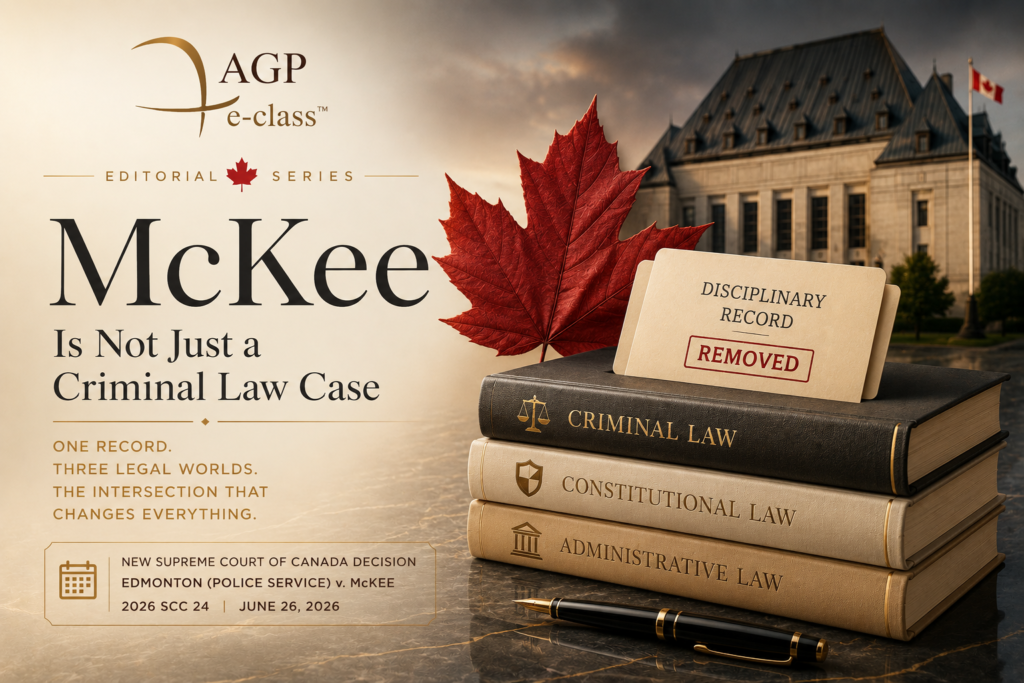
The McKee Files | Pilot: McKee Is Not Just a Criminal Law Case | AGP e-class™
Why Passive Reading Is Not Exam Preparation | AGP e-class™

Why Canadian Constitutional Law Exam Feels Deceptive | AGP e-class™

Canadian Administrative Law Exam Is Not What You Think It Is | AGP – eclass™
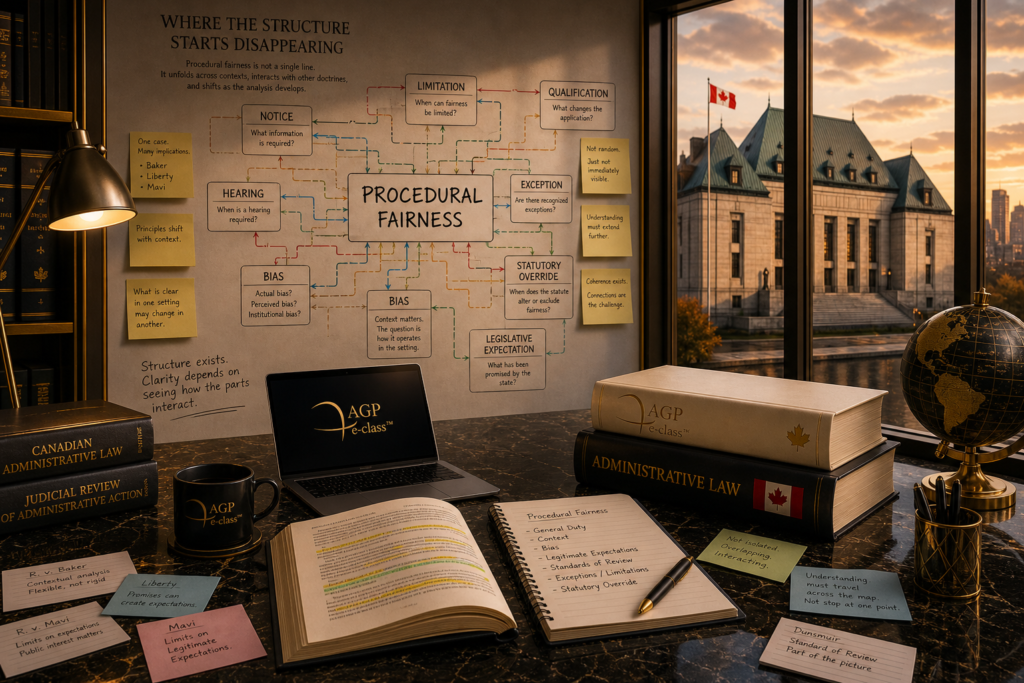
Why Procedural Fairness Often Feels Scattered | AGP e-class™

The Structure Behind Canadian Administrative Law | AGP e-class™ Lawbrary

Why Canadian Administrative Law Feels Confusing | AGP e-class™
AGP e-class™ Student Insight Briefing
Follow the public conversation
Editorial pieces, professional opportunities, cohort updates, and Canadian law pathway signals.
Receive selected student updates
Important notices, new Editorial pieces, cohort information, and timely professional signals.
Watch deeper legal briefings
Long-form guidance on Canadian law, the NCA pathway, legal reasoning, and professional readiness.