
1. The new McKee Decision isn’t Just a Criminal Law Case
Edmonton (Police Service) v. McKee 2026 SCC 24 | JUNE 26, 2026
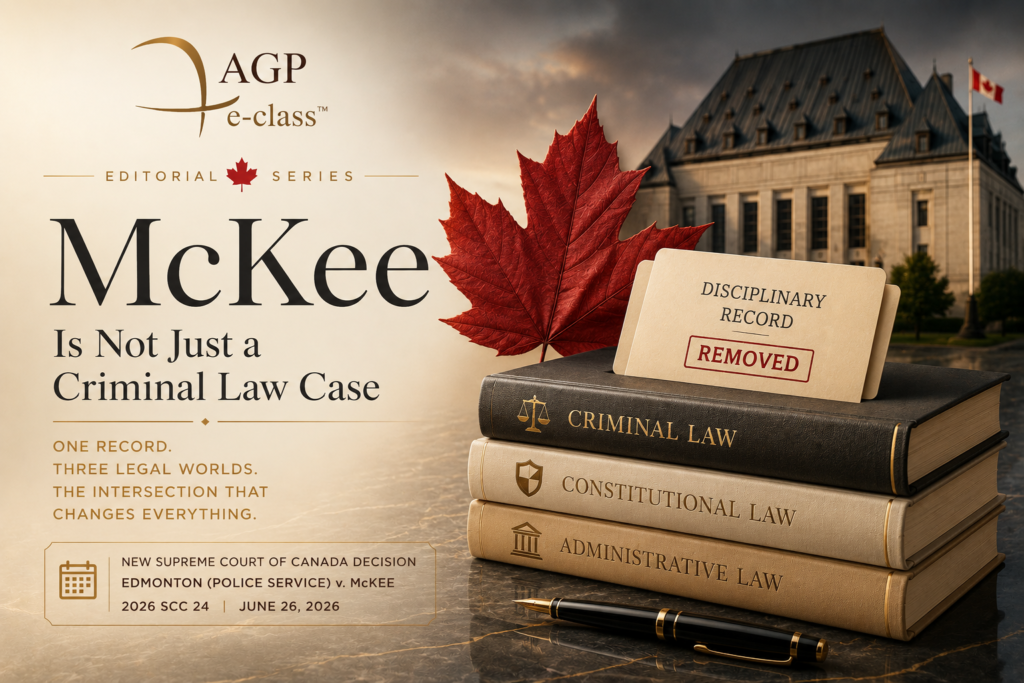
On June 26, 2026, the Supreme Court of Canada released Edmonton (Police Service) v. McKee (“McKee”).
At first glance, it appears to be a criminal disclosure case. An accused person wanted information about past misconduct by a police detective involved in the investigation. The police resisted because the misconduct finding had already been removed from the officer’s disciplinary record under Alberta’s police discipline regime.
That is where the case begins. But it does not stay there.
The more carefully McKee is read, the more it becomes clear that the Supreme Court was dealing with something larger than one disclosure dispute. The case brings criminal law, constitutional law, and administrative/public law into the same frame, through one police misconduct record.
The police discipline system had its own purpose. It dealt with internal discipline, records, and the future use of misconduct findings within that structure. From that perspective, the removal of the record mattered.
The criminal justice system was asking a different question. It was concerned with whether the information could assist the accused in meeting the Crown’s case, challenging police credibility, testing investigative reliability, or making decisions about the conduct of the defence.
Constitutional law sat underneath that criminal question. Disclosure is one of the practical ways in which the accused’s right to make full answer and defence becomes meaningful.
That is where McKee becomes important for serious students.
The same police misconduct finding had one meaning inside the police discipline system and another meaning inside the criminal prosecution. Its administrative status mattered, and it did not exhaust its legal significance.
This is the part of the judgment that changes how the case should be read.
McKee is about disclosure, and it is also about the limits of administrative record-clearing. It is about criminal defence rights, and it is also about how far a police discipline regulation can travel outside its own purpose. It is about a record, and it is also about the danger of assuming that a record removed for one legal purpose has disappeared for every legal purpose.
The Court’s answer preserves that distinction.
Administrative removal may change the record’s position within the disciplinary system. It does not automatically decide whether the information remains relevant in a criminal proceeding. That second question belongs to the disclosure regime, and that regime is connected to trial fairness.
For students, this is where McKee becomes more than a new Supreme Court decision.
It shows why studying law only by subject label can flatten a judgment. A Criminal Law student may see disclosure. A Constitutional Law student may see fair trial rights. An Administrative Law student may see a regulation, statutory purpose, and institutional power.
McKee requires all three.
The case therefore opens a new AGP e-class™ Editorial series on how Canadian legal systems interact inside Supreme Court judgments.
The series will not treat McKee as a simple case note. It will return to this judgment from different angles and ask what becomes visible when one legal fact moves through criminal law, constitutional law, and administrative/public law.
🧠 The first lesson is already visible: A record may be removed for one legal purpose and still remain legally alive for another.
Move from reading to real practice
More from the Editorial

Why Passive Reading Is Not Exam Preparation | AGP e-class™
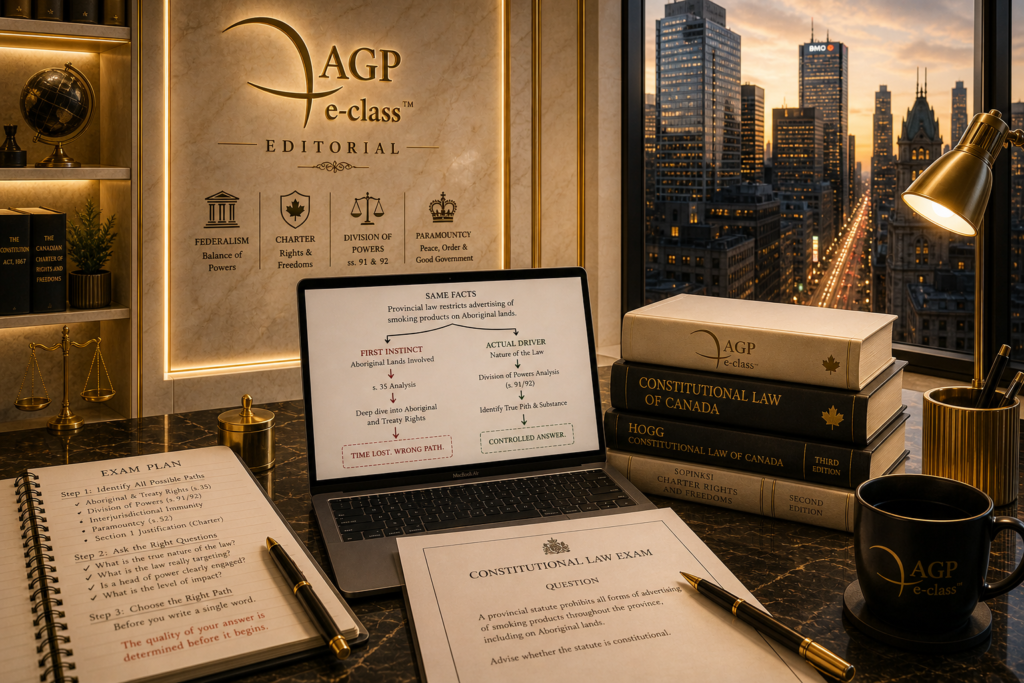
Why Canadian Constitutional Law Exam Answers Fail Even When You Think You Know the Law

Why Canadian Constitutional Law Exam Feels Deceptive | AGP e-class™

Canadian Administrative Law Exam Is Not What You Think It Is | AGP – eclass™
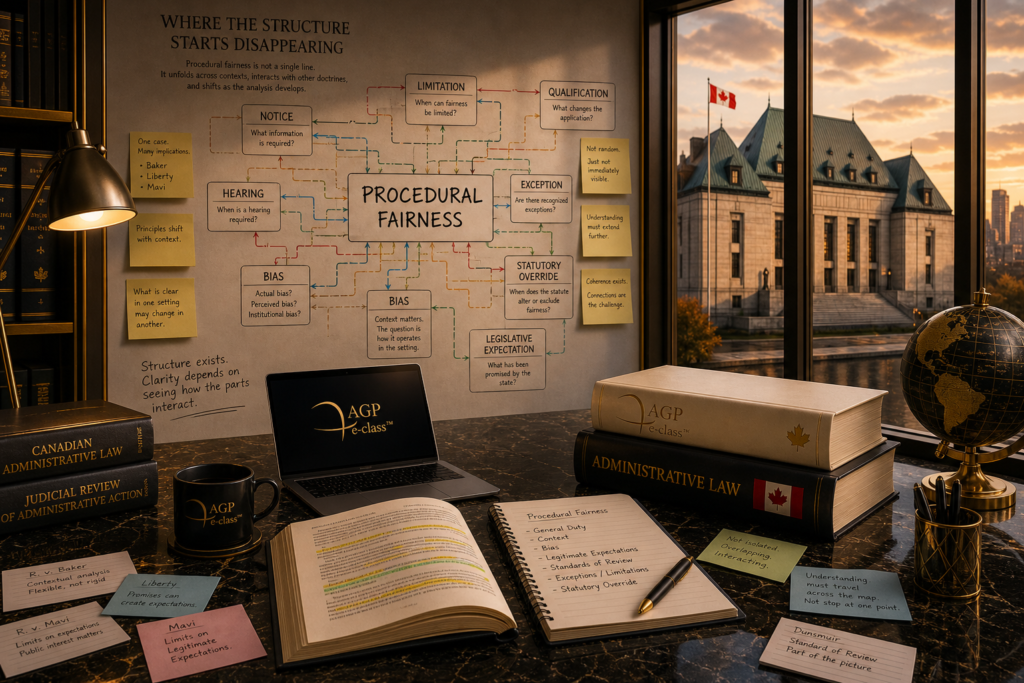
Why Procedural Fairness Often Feels Scattered | AGP e-class™

The Structure Behind Canadian Administrative Law | AGP e-class™ Lawbrary

Why Canadian Administrative Law Feels Confusing | AGP e-class™
AGP e-class™ Student Insight Briefing
Follow the public conversation
Editorial pieces, professional opportunities, cohort updates, and Canadian law pathway signals.
Receive selected student updates
Important notices, new Editorial pieces, cohort information, and timely professional signals.
Watch deeper legal briefings
Long-form guidance on Canadian law, the NCA pathway, legal reasoning, and professional readiness.