
The McKee Files | Episode 2
When Police Credibility Becomes a Fair-Trial Question
How evidence law and constitutional disclosure meet in McKee
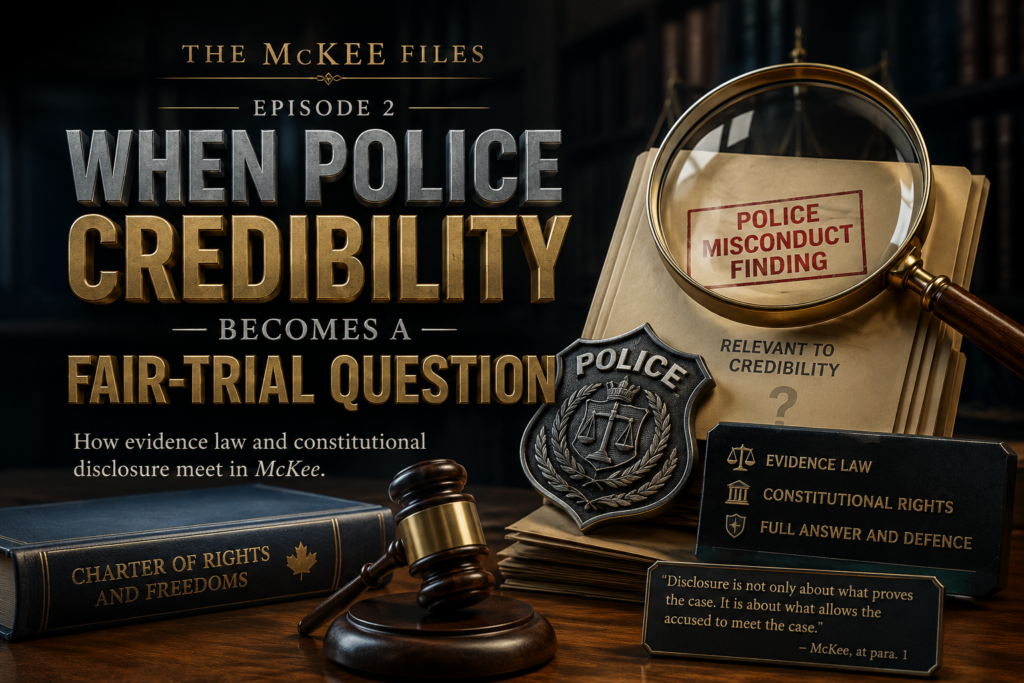
A criminal trial is concerned with evidence. Yet evidence does not arrive in court on its own. It is collected, preserved, interpreted and presented by people.
That is why the credibility of a police officer can become more than a question about whether a particular witness should be believed. It can become a question about whether the accused has been given a fair opportunity to challenge the case constructed against them.
This connection lies near the centre of Edmonton (Police Service) v. McKee.
The case involved a finding of misconduct against the lead investigating detective. After reviewing the information, the Crown concluded that the misconduct was serious, had a realistic bearing on the detective’s credibility, and should be disclosed in cases where his involvement was more than peripheral (McKee, at para. 3).
The importance of that conclusion becomes clearer once the Court turns to the law of relevance.
At paras. 86 and 87, the Court explains that evidence is relevant when, as a matter of logic and human experience, it makes a fact more or less probable. The information does not have to prove the point by itself. It is enough that it contributes, even slightly, to a legitimate inference.
Credibility evidence operates in precisely this way. A past finding of misconduct may not concern the offence being tried. It may nevertheless help the defence assess whether an officer’s account should be accepted, whether an investigative step was performed reliably, or whether the evidence produced by the investigation deserves closer scrutiny.
The Court makes this connection explicit at para. 94. Police misconduct may bear on testimonial honesty, evidentiary reliability, investigative integrity, bias, interview practices and compliance with the Charter. These are not interchangeable concerns. Each creates a different possible connection between the officer’s conduct and the case against the accused.
An honesty-related finding may assist in testing testimony. Neglect or destruction of material may raise questions about investigative integrity. Abusive interview practices may affect the admissibility or weight of a statement. Misuse of authority may become relevant to a separate Charter claim.
The disciplinary finding therefore matters because of what it may allow the defence to examine.
This is where evidence law meets constitutional law.
The right to make full answer and defence, protected through ss. 7 and 11(d) of the Charter, is given practical effect through disclosure. The defence must receive relevant, non-privileged information capable of assisting it in meeting the Crown’s case, advancing a defence or making decisions about how the defence should be conducted (McKee, at para. 1).
Seen from this perspective, disclosure is not simply about handing over evidence that proves or disproves the charge. It also includes information that may help the accused test the credibility of the witnesses, the reliability of the investigation and the integrity of the process through which the prosecution’s evidence was created.
That is the deeper connection exposed by McKee.
The law of evidence asks whether information can support a legitimate inference. Constitutional law asks whether withholding that information would deprive the accused of a meaningful opportunity to defend the case. In police-misconduct disclosure, the two questions converge.
The Court does not say that every complaint or disciplinary entry must automatically reach the defence. At para. 91, it repeats the warning from R. v. McNeil: an accused is not entitled to every aspect of an officer’s employment history or to misconduct having no realistic bearing on the case.
The inquiry remains contextual. The nature of the misconduct matters. The officer’s role matters. The issues expected to arise at trial matter.
But once misconduct may reasonably affect credibility, reliability or investigative integrity, it is no longer merely an internal employment matter. It has entered the territory of evidence and, through disclosure, the territory of constitutional fairness.
That leaves another question.
What happens when the disciplinary system has already removed the finding from the officer’s record? Can an administrative rule change the evidentiary significance of information that may still assist the defence?
That is where the next intersection begins…. stay tuned!
More from The McKee Files
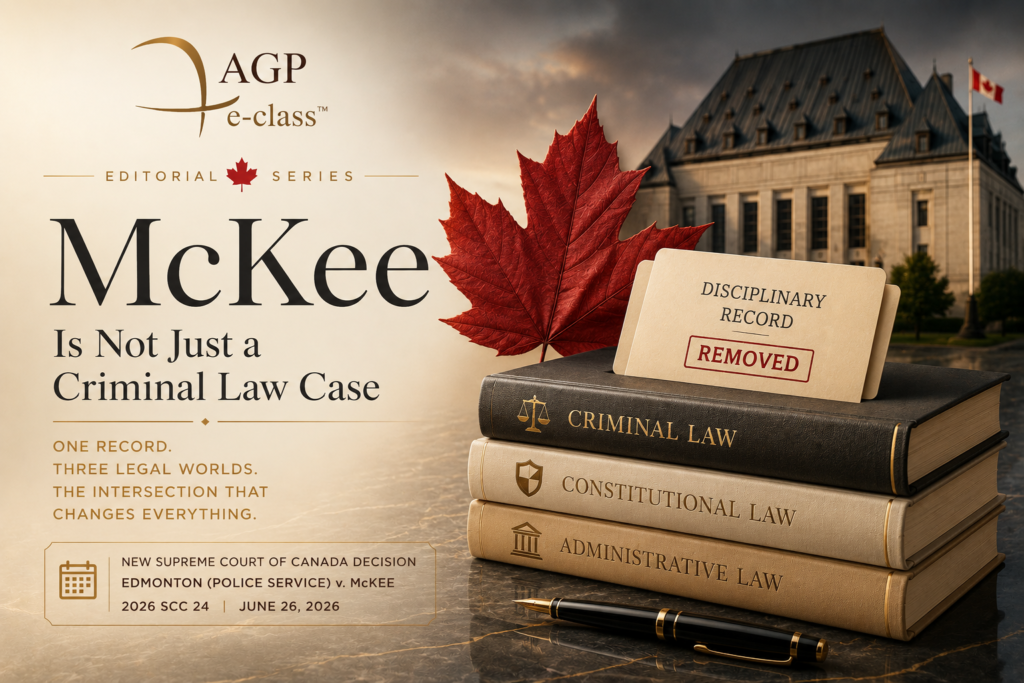
The McKee Files | Pilot: McKee Is Not Just a Criminal Law Case | AGP e-class™
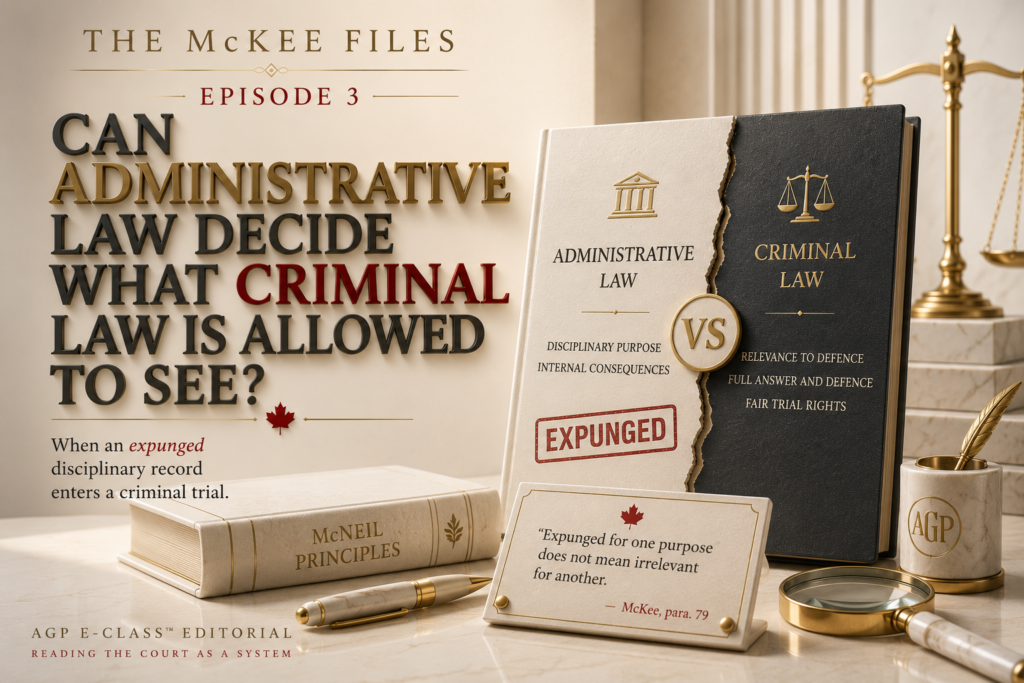
The McKee Files | Episode 3: Can Administrative Law Decide What Criminal Law Is Allowed to See?

The McKee Files | Episode 4: When Privacy Meets the Right to a Defence | AGP e-class™
The McKee Files | Episode 4 When Privacy Meets the Right to a Defense When…

The McKee Files | Episode 5: Who Decides What the Defence Gets to See? | AGP e-class™
Move from reading to real practice
More from the Editorial
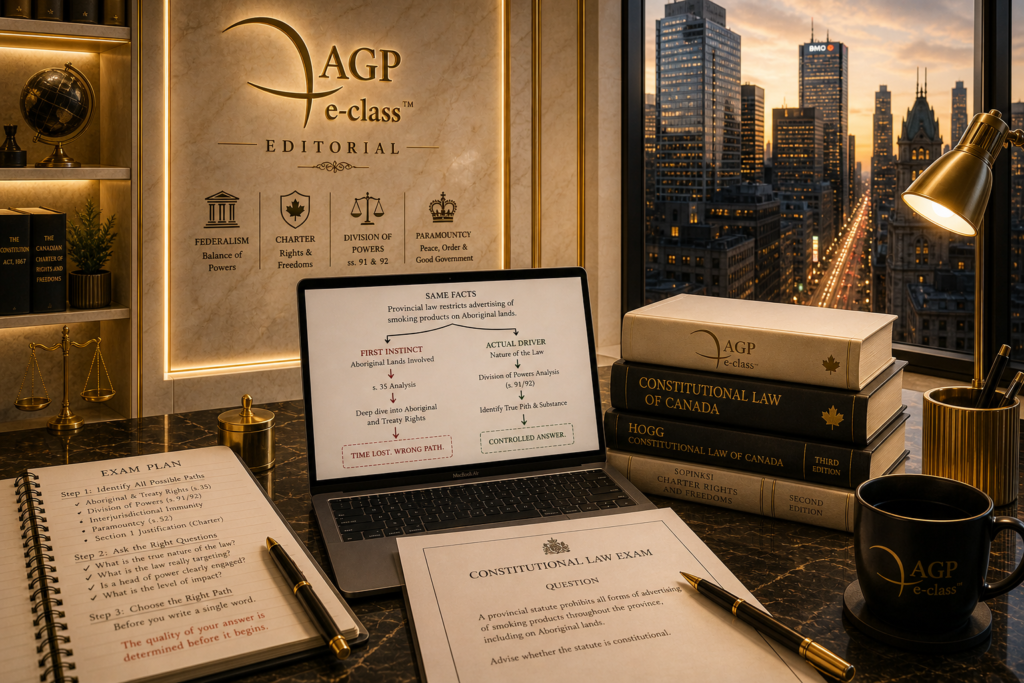
Why Canadian Constitutional Law Exam Answers Fail Even When You Think You Know the Law

Why Canadian Constitutional Law Exam Feels Deceptive | AGP e-class™

Canadian Administrative Law Exam Is Not What You Think It Is | AGP – eclass™
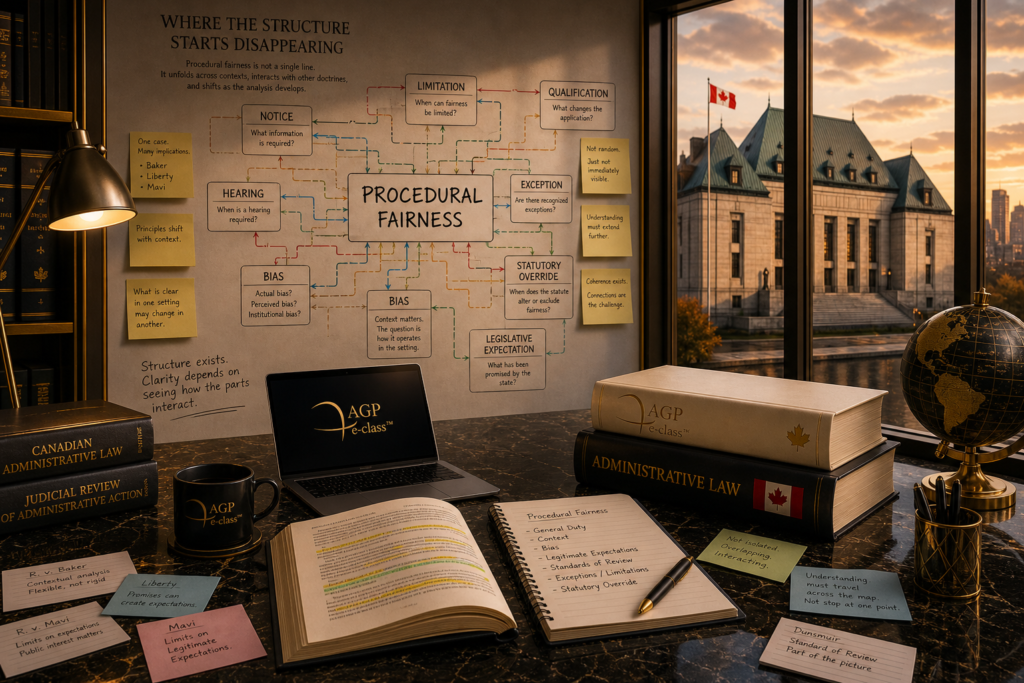
Why Procedural Fairness Often Feels Scattered | AGP e-class™

The Structure Behind Canadian Administrative Law | AGP e-class™ Lawbrary

Why Canadian Administrative Law Feels Confusing | AGP e-class™
AGP e-class™ Student Insight Briefing
Follow the public conversation
Editorial pieces, professional opportunities, cohort updates, and Canadian law pathway signals.
Receive selected student updates
Important notices, new Editorial pieces, cohort information, and timely professional signals.
Watch deeper legal briefings
Long-form guidance on Canadian law, the NCA pathway, legal reasoning, and professional readiness.