
The McKee Files | Episode 4
When Privacy Meets the Right to a Defense
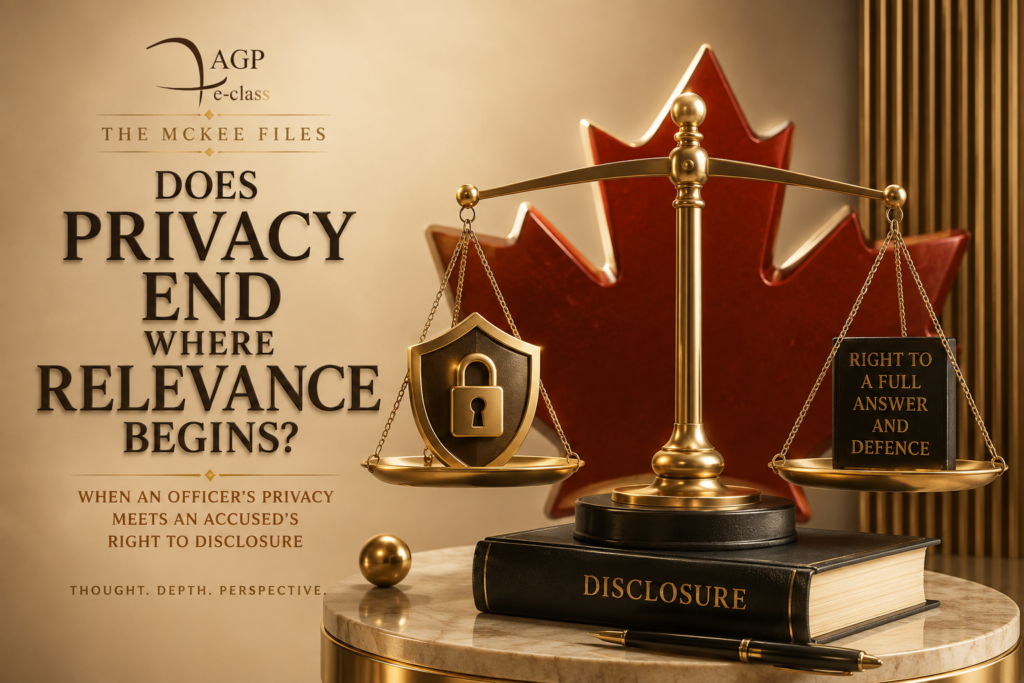
When an officer’s privacy meets an accused person’s right to disclosure
Some information can be both private and important. That is where Edmonton (Police Service) v. McKee becomes difficult.
The Supreme Court had already concluded that an expunged police disciplinary finding could still fall within the criminal disclosure regime. Administrative expungement did not make potentially relevant information disappear.
But that created another problem: What about the officer’s privacy? The answer in McKee is more subtle than saying that disclosure simply defeats privacy.
At paras. 120–122, the Court preserves several protections for officers whose disciplinary information enters the disclosure process. An officer may receive notice and make submissions. Police may identify particular privacy concerns for the Crown. Personal information that is irrelevant to the criminal proceeding may be redacted.
Privacy therefore survives. However, the subtle but more important question here is: What changes is what privacy is allowed to make..?
It can protect information the defence does not need. However, it cannot decide that relevant information should cease to exist for disclosure purposes simply because that information is sensitive.
That distinction becomes especially sharp when the Court discusses redaction. Redaction sounds like an obvious solution. Remove the private information and disclose what remains.
But what if the private information is itself relevant? The Court draws the line there.
At para. 122, it accepts redaction of personal identifiers and sensitive information that has no relevance to the proceeding. But relevant portions of the record cannot simply be removed under the banner of privacy.
That is an important boundary. The law is not saying that a police officer loses privacy by becoming involved in a criminal investigation. Nor is it saying that an accused person is entitled to know everything about an investigating officer.
It is asking a narrower question: What does the accused need to know to defend the case?
Once framed that way, privacy and disclosure stop looking like absolute opposites. An officer has an interest in preventing unnecessary circulation of personal information. An accused has a constitutional interest in receiving information that may matter to the defence.
The solution in McKee is therefore not to eliminate either interest. It is to separate the necessary from the unnecessary. That sounds simple, right? It rarely is.
A disciplinary record may contain personal details, allegations, findings and contextual information intertwined in the same document. Deciding what is genuinely irrelevant is therefore not merely an exercise in blacking out names and addresses.
Every redaction contains a judgment. And when the information may affect the defence of a person facing criminal prosecution, that judgment carries constitutional consequences.
This is why McKee matters beyond police disciplinary records. It exposes something fundamental about privacy in the criminal process. Calling information “private” tells us something important about how it should be handled. It does not necessarily tell us whether it can be withheld.
🧠 The broader lesson in McKee
Rights do not always collide because one of them must disappear. Sometimes the real legal question is what each right is allowed to control.
In McKee, privacy continues to protect the unnecessary.But relevance determines what cannot simply be hidden.
And that leaves another question. If privacy does not decide what the defence gets to see, who does?
More from The McKee Files
The McKee Files | Pilot: McKee Is Not Just a Criminal Law Case | AGP e-class™
The McKee Files | Episode 2: When Police Credibility Becomes a Fair-Trial Question
The McKee Files | Episode 3: Can Administrative Law Decide What Criminal Law Is Allowed to See?

The McKee Files | Episode 5: Who Decides What the Defence Gets to See? | AGP e-class™
Move from reading to real practice
More from the Editorial
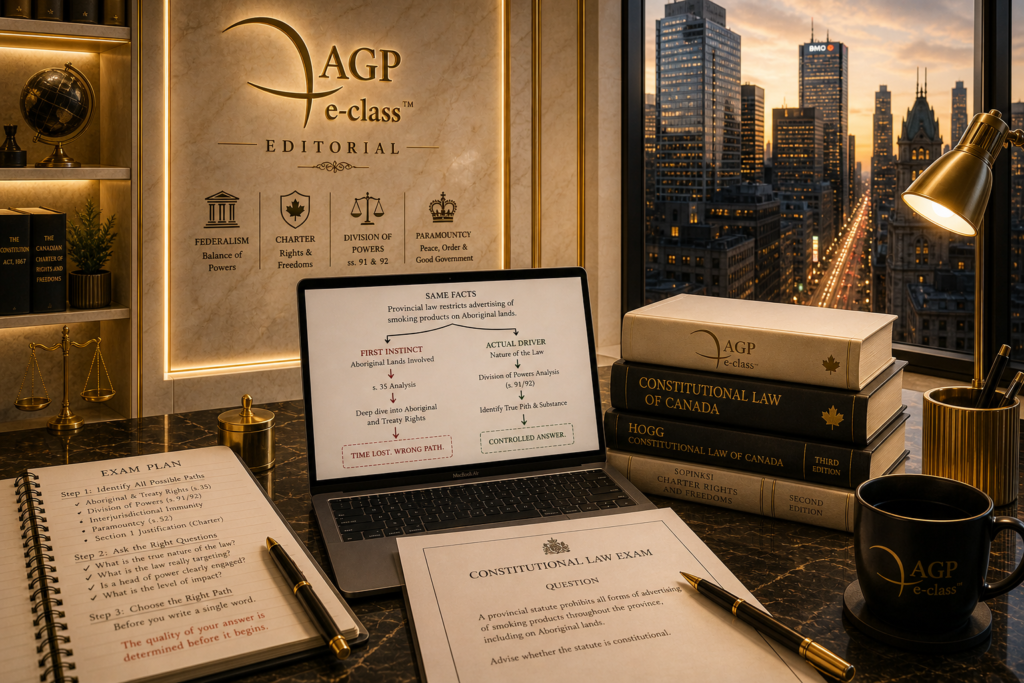
Why Canadian Constitutional Law Exam Answers Fail Even When You Think You Know the Law

Why Canadian Constitutional Law Exam Feels Deceptive | AGP e-class™

Canadian Administrative Law Exam Is Not What You Think It Is | AGP – eclass™
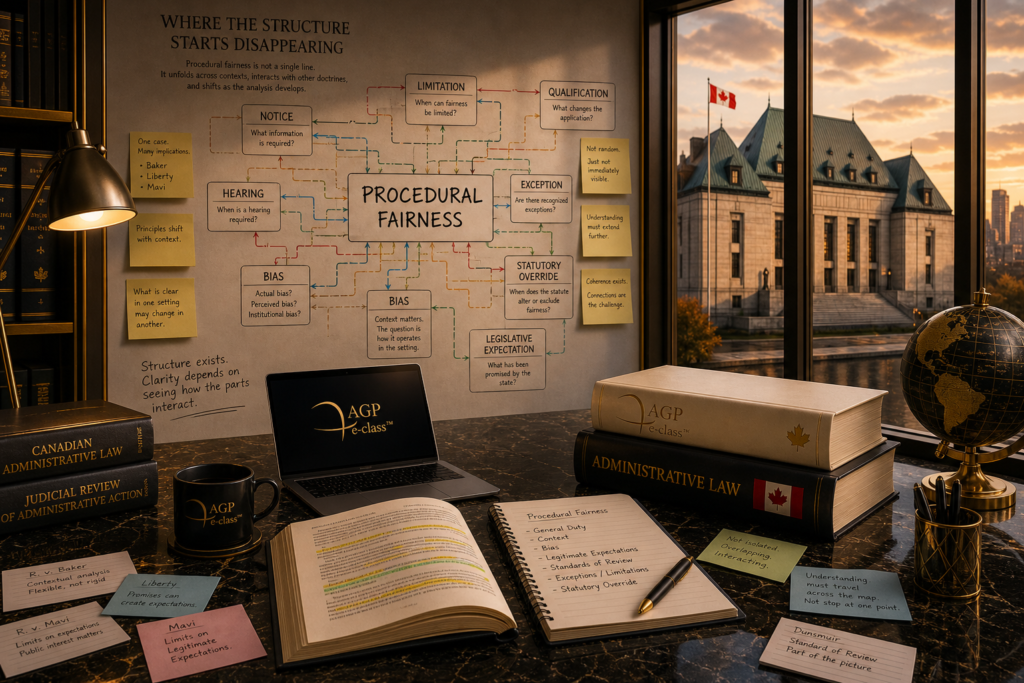
Why Procedural Fairness Often Feels Scattered | AGP e-class™

The Structure Behind Canadian Administrative Law | AGP e-class™ Lawbrary

Why Canadian Administrative Law Feels Confusing | AGP e-class™
AGP e-class™ Student Insight Briefing
Follow the public conversation
Editorial pieces, professional opportunities, cohort updates, and Canadian law pathway signals.
Receive selected student updates
Important notices, new Editorial pieces, cohort information, and timely professional signals.
Watch deeper legal briefings
Long-form guidance on Canadian law, the NCA pathway, legal reasoning, and professional readiness.