
The McKee Files | Episode 5
Who Decides What the Defence Gets to See?

Disclosure begins with the police. But it does not end there.
Police hold the information. But does that mean police decide whether the defence gets to see it..?
In Edmonton (Police Service) v. McKee, the Supreme Court’s answer is important: not ultimately. That distinction sits quietly inside the judgment, but it says something significant about how responsibility is divided within the criminal justice system.
Police obviously cannot be removed from the disclosure process. They know their own records and the investigation. And where possible misconduct by an officer may be relevant to a prosecution, someone has to identify that information before anybody else can assess it.
So police have a role. But the Court does not give them the final word.
At paras. 123–124, McKee describes the police assessment as a form of triage. Police review the information they hold and determine what appears potentially relevant to the prosecution.
Even when they conclude that particular information is irrelevant, however, the matter does not simply disappear. The Crown must be told that the information exists and why it was withheld.
That is a small procedural detail with a much larger implication: Possessing information is not the same thing as having legal authority to decide its significance.
The distinction matters especially in McKee because the information concerns the police themselves.
The disputed material involved disciplinary findings relating to an officer involved in the investigation. If police alone could decide whether information concerning their own officer was relevant enough to leave police control, one institution would effectively determine the legal significance of information about itself.
However, that does not mean police cannot make that decision honestly. The point is structural, not personal. The criminal justice system does not need to depend on that assumption.
Instead, McKee places the ultimate assessment of relevance with the Crown.
Why the Crown? Because the prosecutor sees something the police do not necessarily see in the same way: the prosecution as a whole. The Crown knows how the officer’s evidence fits into the case. It can consider whether the information may matter to credibility, to the conduct of the investigation or to some other issue raised by the prosecution.
And unlike the police, the Crown carries the constitutional disclosure obligation. That responsibility comes with something else too: Independence.
The prosecutor is not simply an extension of the investigation. The Crown must assess disclosure fairly and impartially, including information that may weaken rather than strengthen the prosecution.
So McKee separates two things that can easily be confused.
The police know the information. The Crown decides its legal relevance for disclosure. And even then, the Crown’s decision is not necessarily the end of the matter. If disclosure is challenged, a court can review what has been withheld.
The structure therefore has several layers, but the reason for those layers is surprisingly simple. The closer an institution is to information, the better placed it may be to find it. However, that does not necessarily make it the best institution to decide what the law requires others to know.
🧠 The broader lesson in McKee
Disclosure is often described as the production of information. McKee shows that it is also an allocation of power.
Someone finds the information – someone decides whether it matters – and someone else may ultimately decide whether that decision was lawful.
Those distinctions become particularly important when the information capable of testing the prosecution is held by the very institution that helped build it.
The question is therefore not only: What does the defence get to see?
Sometimes the more revealing question is: Who gets to decide?
More from The McKee Files
The McKee Files | Pilot: McKee Is Not Just a Criminal Law Case | AGP e-class™
The McKee Files | Episode 2: When Police Credibility Becomes a Fair-Trial Question
The McKee Files | Episode 3: Can Administrative Law Decide What Criminal Law Is Allowed to See?
The McKee Files | Episode 4: When Privacy Meets the Right to a Defence | AGP e-class™
The McKee Files | Episode 4 When Privacy Meets the Right to a Defense When…
Move from reading to real practice
More from the Editorial
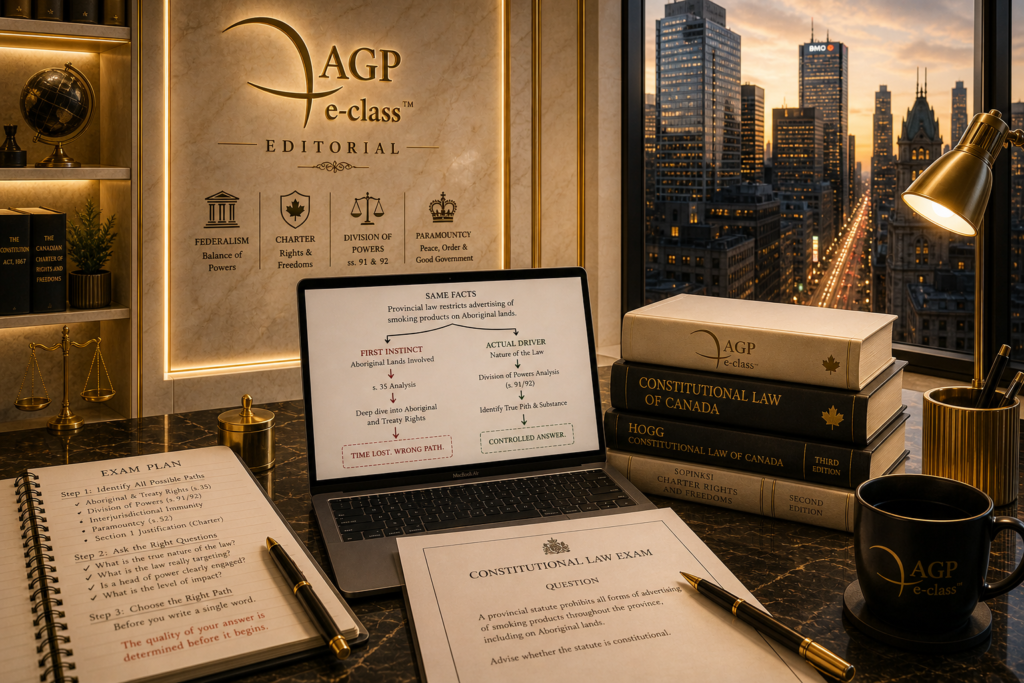
Why Canadian Constitutional Law Exam Answers Fail Even When You Think You Know the Law

Why Canadian Constitutional Law Exam Feels Deceptive | AGP e-class™

Canadian Administrative Law Exam Is Not What You Think It Is | AGP – eclass™
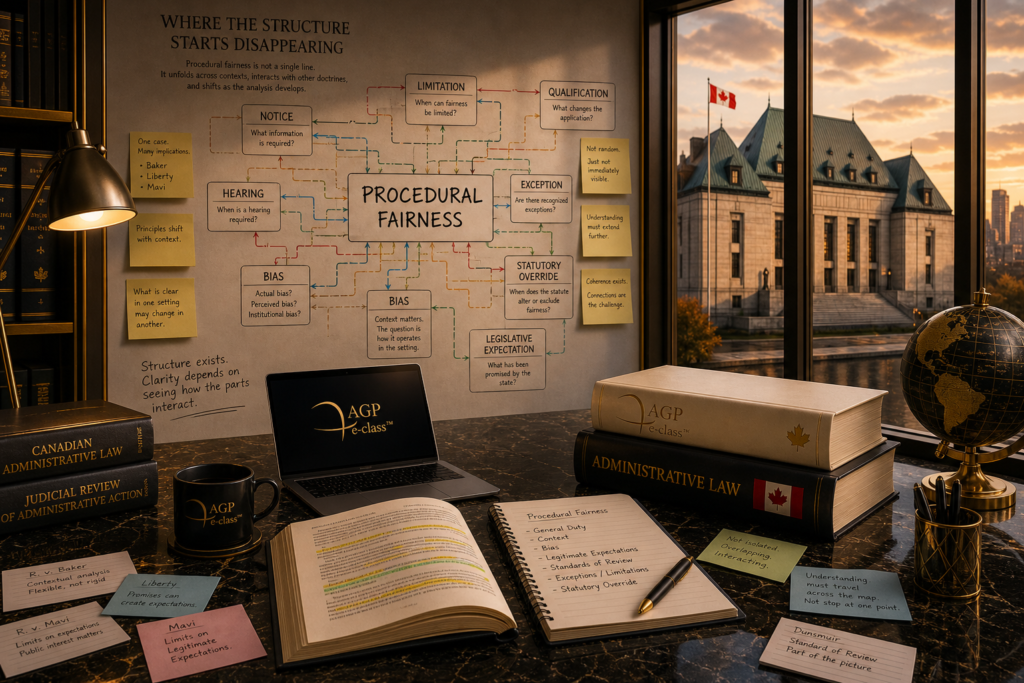
Why Procedural Fairness Often Feels Scattered | AGP e-class™

The Structure Behind Canadian Administrative Law | AGP e-class™ Lawbrary

Why Canadian Administrative Law Feels Confusing | AGP e-class™
AGP e-class™ Student Insight Briefing
Follow the public conversation
Editorial pieces, professional opportunities, cohort updates, and Canadian law pathway signals.
Receive selected student updates
Important notices, new Editorial pieces, cohort information, and timely professional signals.
Watch deeper legal briefings
Long-form guidance on Canadian law, the NCA pathway, legal reasoning, and professional readiness.